Table Of Content

The return to baseline phase is essential to evaluate whether the changes observed in behavior during the intervention phase are indeed due to the treatment. By removing the intervention, researchers can assess if the behavior reverts back to the baseline level, providing evidence of the treatment's impact on behavior. During this phase, an intervention or treatment is introduced to modify the behavior being studied. The goal of the intervention is to bring about a change in behavior or to address a specific target behavior. For those who initiated—but then discontinued—ABA, most documented reasons for ABA discontinuation were unrelated to progress on treatment goals. Children who had a prior history of receiving ASD services (speech therapy, special education) were more likely to stay in ABA than those who did not.
Misophonia and Autism Explained
It’s worth mentioning that the Food and Drug Administration (FDA) banned electric shock in therapy by 2020, only for the ban to be overturned in 2021 due to the fact that the ban may infringe on the practice of medicine. The compensation we receive from advertisers does not influence the recommendations or advice our editorial team provides in our articles or otherwise impact any of the editorial content on Forbes Health. CEO of CrossRiverTherapy - a national ABA therapy company based in the USA.

Chapter 4.2 ABAB
Both the ABA and ABAB designs are valuable research tools in applied behavior analysis therapy. They allow for the assessment of treatment effects and help researchers and therapists make data-driven decisions to support individuals in reaching their goals. By utilizing these designs, professionals in the field can gain insights into the effectiveness of interventions and tailor therapy approaches to meet the specific needs of individuals with autism and other behavioral challenges. Thus far, the designs that we have described are only appropriate to answer questions regarding the effects of a single intervention or variable. In many cases, however, investigators—whether they are researchers, educators, or clinicians—are interested in not only whether an intervention works but also whether it works better than an alternative intervention. One strategy for comparing the effects of two interventions is to simply extend the logic of withdrawal designs to include more phases and more conditions.
Exploring High Functioning Autism Behaviors
Although the clinical/educational appeal of such a metric seems obvious (easy to calculate, it is consistent with visual inspection of graphic data), there are potential problems with the approach. In addition, there is no known sampling distribution, making it impossible to derive a confidence interval (CI). CIs are important because they help create an interpretive context for the dependability of the effect by providing upper and lower bounds for the estimate. Lang and colleagues (2011) used an ATD to examine the effects of language of instruction on correct responding and inappropriate behavior (tongue clicks) with a student with autism from a Spanish-speaking family. To ensure that the conditions were equivalent, all aspects of the teaching sessions except for the independent variable (language of instruction) were held constant.
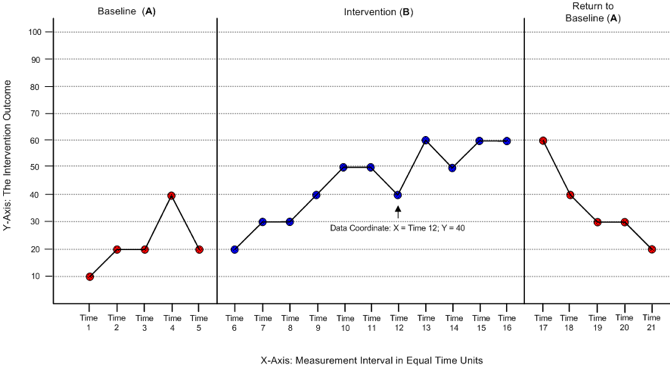
It allows for clear comparisons between the baseline and treatment phases, enabling researchers to make informed decisions about the efficacy of a particular intervention. The interventions used in ABA therapy are evidence-based and rely on positive reinforcement techniques. By reinforcing desired behaviors and providing appropriate consequences, ABA therapy helps individuals with autism acquire new skills, improve communication, develop social interactions, and enhance their daily living activities.
Autism Behavior Problems in the Classroom: Overcoming Strategies
Thus, consistent with all of the points made above, sound methodology (design, measurement) is the biggest determinant of valid decision making. Overall, the four issues discussed above—effect detection, magnitude of effect, quality of the inference, and practice decisions—reflect the critical dimensions involved in the analysis of SSED. The importance of any one dimension over the other will likely depend on the purpose of the study and the state of the scientific knowledge about the problem being addressed. At issue here is not determining whether there was an effect and its standardized size but whether there is change in behavior or performance over time—and the rate of that change.
It is important to realize that with the ABA design method the intervention will be removed from the scenario, and if it doesn't work, the process will start over from scratch with a new intervention idea. An example of this would be for a child who needs a structured schedule, the analysts might introduce a task chart as their intervention method to help the child. If the child follows the chart, they will be offered a reward for their efforts. One important thing you should remember is if the analyst chooses to go further and add more As and Bs, this design will always end with a "B", which will reintroduce the intervention rather than withdrawing it, leaving them without.
This type of experiment can also be used for anxiety disorders and feeding disorders. In conclusion, both the ABA and ABAB designs offer valuable insights into the effectiveness of interventions in applied behavior analysis. The ABA design demonstrates experimental control, while the ABAB design allows for repeated cycles of intervention and withdrawal, potentially leading to faster results. The choice between these designs depends on the research question and the specific needs of individuals receiving behavioral interventions.
Autism Stimming Behaviors: Impact & Management Strategies
Upgrading Children to Super-power MCNL Aids: A Clinical Trial Using an A-B-A Test Method - The Hearing Review
Upgrading Children to Super-power MCNL Aids: A Clinical Trial Using an A-B-A Test Method.
Posted: Fri, 12 Nov 2021 11:12:25 GMT [source]
Because there are no longer distinct phases of each intervention, the interpretation of the results of ATD studies differs from that of the studies reviewed so far. Rather than comparing between phases, all the data points within a condition (e.g., all sessions of Intervention 1) are connected (even if they do not occur adjacently). Demonstration of experimental control is achieved by having differentiation between conditions, meaning that the data paths of the conditions do not overlap. As a result, this study provides strong evidence that the question-asking intervention results in increases in collateral question-asking.
As work in this area continues, novel effect size indices will likely emerge. It is worth noting that although they are often used interchangeably in the literature, the terms withdrawal design and reversal design refer to two related but distinctly different research designs. In the withdrawal design, the third phase represents a change back to pre-intervention conditions or the withdrawal of the intervention.
Data helps them to monitor the person’s progress toward goals on an ongoing basis. A qualified and trained behavior analyst (BCBA) designs and directly oversees the program. They customize the ABA program to each learner's skills, needs, interests, preferences and family situation. When a behavior is followed by something that is valued (a reward), a person is more likely to repeat that behavior.
The ABA and ABAB design are especially useful in applied behavioral analysis (ABA) as they help therapists identify and concentrate on interventions that are successful. Therapists can avoid wasting time with strategies that do little to alter behavior. Multiple baseline across participants is done by having multiple participants in the study and staggering when the intervention is applied.
Then, another paragraph including an illustration was given to the children to read. Finally, they were given another paragraph that contained only text and retested to see if their grasp of the information returned to the initial test results. Using the ABA design, the therapist can evaluate the effects of treatment related to baseline responding. This means researchers can use the same statistical procedures with ABAB that they do with a time series analysis.


No comments:
Post a Comment